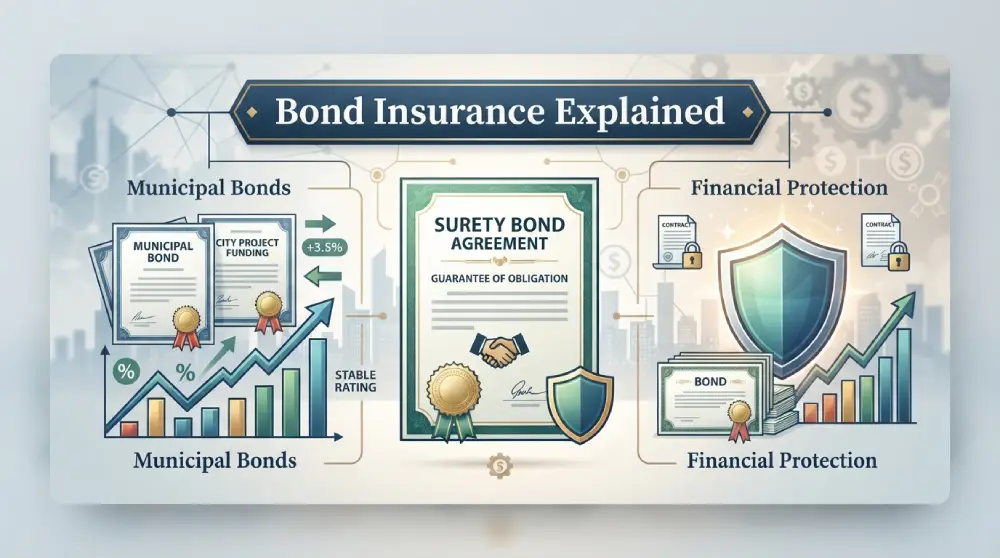
Bond insurance can mean different things depending on the situation. For investors, it may protect scheduled interest and principal payments on certain bonds. For businesses, the term is sometimes used when discussing surety bonds required for licenses, construction projects, or contracts.
Understanding how these arrangements work helps businesses meet their obligations and helps investors evaluate financial risk. Here is what each type covers, what it may cost, and who might need it.

What Is Bond Insurance?
Bond insurance refers to a security that insures bond holders against failure of a bond issuer to make the scheduled payments of principal and interest. An insurance company agrees to pay for the payment shortfall if it is covered by the insurance policy.
Municipal bonds are those issued by cities, states, and other public bodies that are protected by this type of protection. It can help enhance the credit quality of a bond and make it more appealing to investors.
There is also a business context where they can also be used when it relates to surety bonds. All of these are various ways of ensuring that a company or the individual will do something.
The Difference Between a Bond and Insurance
The difference between a bond and insurance comes down to what each agreement protects and who is responsible for a potential loss.
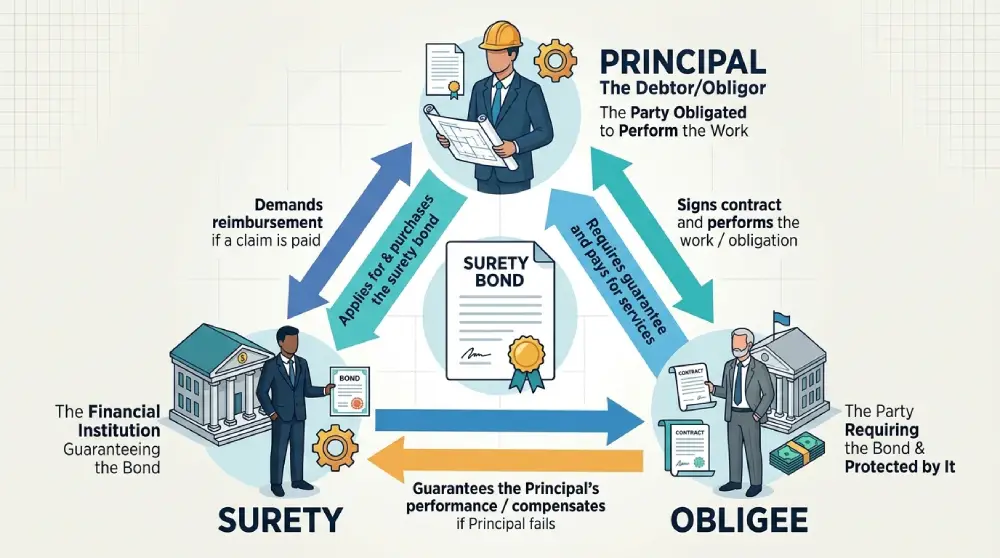
Traditional insurance generally protects the policyholder against covered losses, such as property damage or liability claims. A surety bond is a three-party agreement involving:
- Principal: The business or individual required to meet an obligation.
- Obligee: The customer, government agency, or organization requiring the bond.
- Surety: The company guaranteeing that the principal will fulfill the obligation.
If the principal fails to meet the terms, the surety may pay a valid claim or arrange for the obligation to be completed. The principal may then have to reimburse the surety.
This is why bonding and insurance are not interchangeable. A business may need both to satisfy contractual, legal, and financial responsibilities.
What Does a Bond Insurance Policy Cover?
Coverage depends on the type of bond.
A municipal bond insurance policy generally guarantees scheduled interest and principal payments if the issuer fails to pay. It does not protect investors against every investment risk, such as changing interest rates or market price declines.
Surety bonds, on the other hand, cover specific obligations. Common examples include:
- License and permit bonds: Help ensure businesses follow applicable laws and licensing requirements.
- Contract bonds: Guarantee certain construction or service contract obligations.
- Bid bonds: Provide assurance that a contractor will honor its bid requirements.
- Payment bonds: Help protect eligible subcontractors and suppliers from nonpayment.
- Performance bonds: Provide protection if a contractor fails to complete agreed work.
The terms, limits, exclusions, and claim procedures depend on the individual bond.
Understanding Municipal Bond Insurance Policies
Municipal bonds are used to raise funds for public works and public services. Bonds can be issued by a municipality to fund schools, roads, water systems, hospitals and other infrastructure.
A financial guaranty insurance entails an insurance underwriter’s guarantee of a regularly scheduled payment when the issuer fails to make that payment. This can boost the confidence of investors, and may allow the borrower to borrow at a lower interest rate.
Investors should also consider the insurer’s financial strength, though. The protection is as secure as the company’s ability to fulfil its obligations.
Who Needs Bonding Insurance?
Businesses may need bonding when a government agency, customer, or contract requires financial guarantees.
Common examples include:
- Construction contractors working on public or private projects.
- Electricians, plumbers, and other licensed tradespeople.
- Businesses applying for certain professional or commercial licenses.
- Companies bidding on contracts that require performance or payment guarantees.
- Service providers handling specific regulated responsibilities.
For insurance and bonding for small business, requirements vary by industry, location, and contract. A small contractor, for example, may need general liability insurance and a performance bond before starting a project.
What Does Bond Insurance Cost?
It’s important to note that there isn’t just one price, as factors such as financial risk, coverage amount, and underwriting requirements will affect costs.
In the case of surety bonds, the premium is generally a percentage of the bond amount. A surety company may review the credit of the applicant, financial statements, experience in business and capacity to perform the work required.
In the case of municipal bond insurance, there is a premium which is typically determined by the credit quality of the municipality, the structure of the bond, and the insurance company’s evaluation of the risk of the bond.
The best method to get an estimate on the cost is to ask for a quote for the specific bond or bond issue needed.
How to Get Bonded
If your business needs a surety bond, the process generally involves these steps:
- Identify the required bond: Confirm the bond type and amount with the licensing authority or contracting organization.
- Choose a provider: Contact a licensed surety agency or insurance broker.
- Submit an application: Provide business details, financial information, and other requested documents.
- Complete underwriting: The surety evaluates your financial position, experience, and risk.
- Pay the premium: Once approved, pay the quoted amount.
- Receive the bond: Submit the completed bond to the organization that requires it.
When learning how to get bonded, check the exact requirements first. Buying the wrong bond or choosing an insufficient amount can delay a license or contract.
How to Choose a Bond Insurance Company
Compare providers whether they’re offering financial guaranty coverage or a surety bond.
Take into account the company’s monetary power, licensing, industry experience, claims process, and terms of the policy. When it comes to surety bonds, inquire about the bond requirements, indemnity bonds, renewal conditions and bond amounts available.
Also, read the actual coverages included, not just the quoted premium.
Frequently Asked Questions
Is bond insurance the same as a surety bond?
No. Financial guaranty coverage is designed to insure bondholders against certain defaults in payment. A surety bond is a bond that is issued to ensure that a business or individual will fulfill a specified obligation.
What is financial guaranty insurance?
Financial Guaranty Insurance is an insurance that guarantees the payment of principal and interest to anyone holding a debt obligation that is eligible for it.
Who pays for municipal bond insurance?
The bond issuer typically pays the premium when the bonds are issued. The policy is beneficial to investors because of its payment protection benefits.
Are infrastructure bonds insured?
Certain infrastructure bonds are insured, others are not. Coverage varies from one issuer to another, from one bond to another and also if an insurer agrees to guarantee payments.
Does bond insurance make bond investments risk-free?
No. Bond investments can still involve interest-rate risk, market risk, inflation risk, and other factors. Insurance generally addresses specified payment defaults, not every possible investment loss.