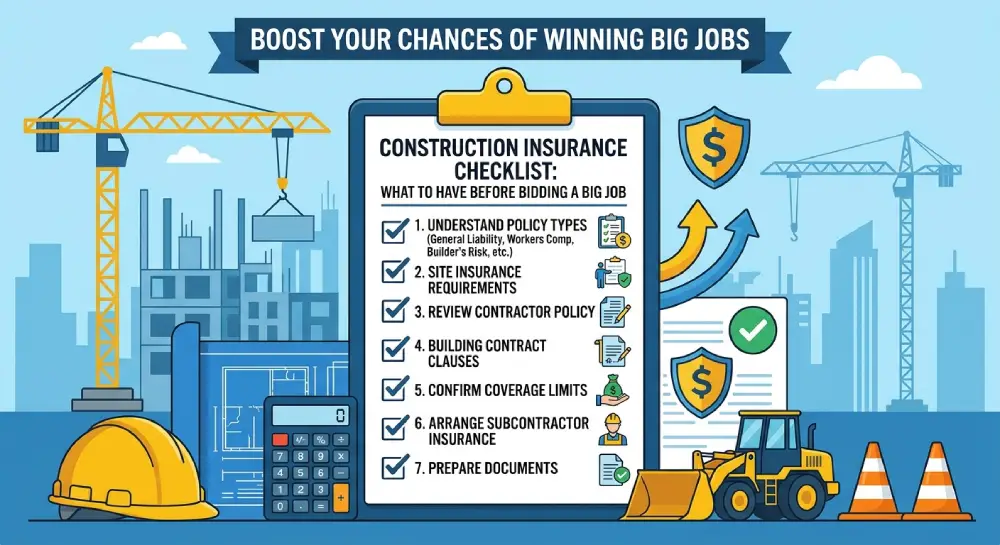
Winning a large construction project involves more than submitting a competitive bid. Having the right construction insurance in place can help prevent unexpected financial losses and keep a project moving when accidents or property damage occur.
Insurance requirements vary by project, contract, location, and type of work. Reviewing your coverage before bidding can help you identify gaps, prepare the necessary documents, and avoid delays during contract approval.
1. Understand the Types of Construction Insurance
The first step is identifying which policies your business may need. Different projects create different risks, so there is no single insurance package that works for every contractor.
Common types of construction insurance include:
- General liability insurance
- Workers’ compensation insurance
- Commercial auto insurance
- Builder’s risk insurance
- Professional liability insurance
- Equipment insurance
Review the project’s scope before deciding which policies and limits are appropriate.
2. Check What Are Construction Site Insurance Requirements
One of the most important questions before bidding is: what are construction site insurance requirements? These are the insurance conditions established by project owners, general contractors, lenders, or local regulations.
Requirements may include specific liability limits, workers’ compensation coverage, builder’s risk protection, and proof of insurance before work begins. Some contracts also require additional insured status, primary and noncontributory wording, or a waiver of subrogation.
Do not assume every project has the same requirements. Read the bid documents and contract carefully, and ask the project owner or general contractor to clarify anything that is unclear.
3. Review Your Contractors Insurance Policy
A contractors insurance policy should reflect the actual work your business performs. A company handling residential renovations may face different risks from a contractor working on commercial buildings, bridges, or large industrial sites.
Before bidding, check:
- Whether your policy covers the type of work involved.
- Whether policy limits meet the contract requirements.
- Whether exclusions could affect the project.
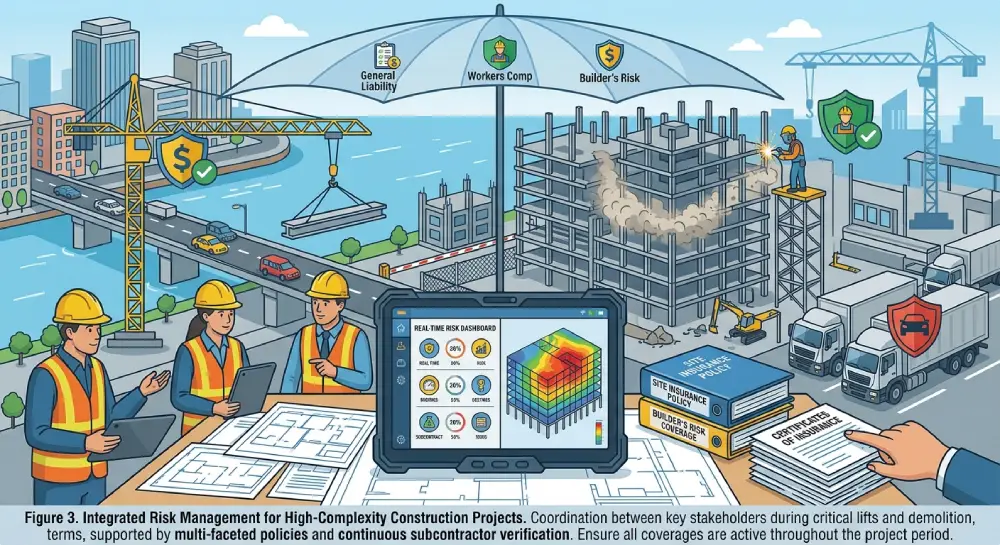
- Whether coverage remains active throughout the project period.
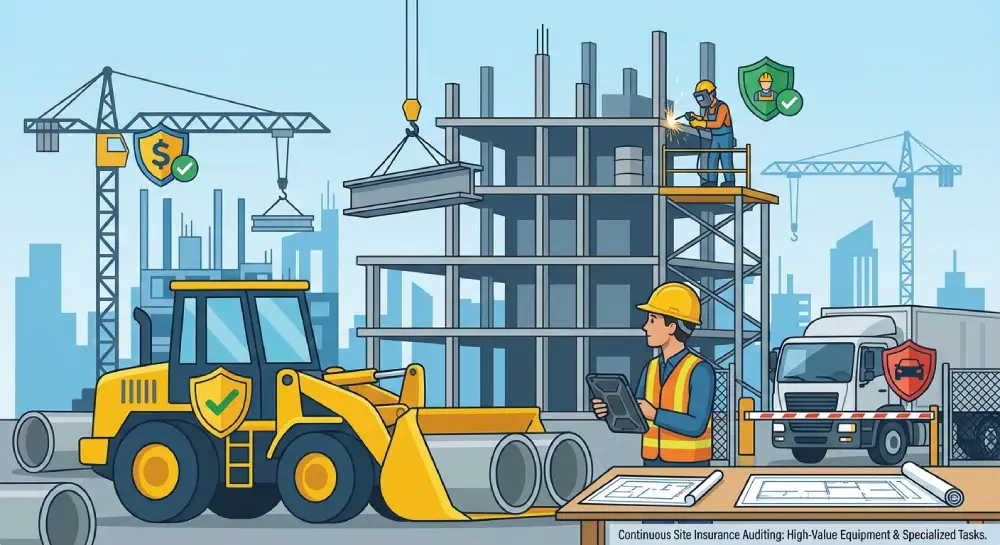
A policy that covers your usual work may not automatically cover specialized or higher-risk activities.
4. Confirm Building Contract Insurance Requirements
A building contract insurance clause explains the coverage that parties must maintain during a construction project. These clauses may specify who is responsible for insuring the structure, materials, workers, equipment, and third-party risks.
Pay attention to the required coverage limits, policy dates, deductibles, and certificate deadlines. Some contracts require the project owner or general contractor to be listed as an additional insured under certain policies.
Ask your insurance agent or broker to review the contract before signing. This can help identify requirements that your existing coverage does not satisfy.
5. Check Your Construction Insurance Coverage Limits
Having insurance does not automatically mean you have enough protection. Your construction insurance coverage should meet the project’s financial and contractual requirements.
For example, a large commercial project may require higher general liability limits than a small residential job. Some owners may also request umbrella or excess liability coverage to increase protection beyond the limits of underlying policies.
Compare your current policy limits with the bid documents. Consider the project’s size, potential property damage, number of workers, equipment value, and possible third-party claims. Your insurance professional can help determine whether additional coverage is needed.
6. Consider a Site Insurance Policy
A site insurance policy may refer to coverage arranged specifically for a construction location or project. Depending on the policy, it may protect the building under construction, materials, temporary structures, and certain equipment.
Builder’s risk insurance is commonly used for this purpose. It may cover specified physical losses caused by events such as fire, theft, or certain weather-related incidents. However, coverage depends on the policy wording, exclusions, and endorsements.
Before the project starts, clarify who is responsible for obtaining the policy. Confirm when coverage begins, when it ends, and whether materials stored off-site or in transit are included.
7. Arrange Insurance for Construction Companies and Subcontractors
Insurance for construction companies should account for the risks created by employees, subcontractors, suppliers, and other parties working on the project.
Before hiring subcontractors, request current certificates of insurance and verify that their policies cover the work they will perform. Depending on the contract, you may also need to confirm specific endorsements and coverage limits.
Do not rely on a certificate alone as proof of every policy condition. Ask your broker to review relevant documents and confirm that the subcontractor’s coverage meets the contractual requirements.
8. Prepare Your Construction Company Insurance Policy Documents
A complete construction company insurance policy review should include more than checking premium payments. Organize the documents that a project owner or general contractor may request during bidding and contract approval.
Keep expiration dates visible and arrange renewals before policies lapse. Missing or outdated documents can delay project approval even when coverage is otherwise available.
9. Review Exclusions, Deductibles, and Coverage Gaps
Before submitting a major bid, review what your policies do not cover. Exclusions may apply to certain construction activities, faulty workmanship, pollution, professional services, or specific types of property damage.
Deductibles also matter because they determine how much your business may need to pay when a covered claim occurs. A policy with a lower premium may include higher deductibles or narrower coverage.
Ask your insurance professional to explain any exclusions or limitations that could affect the project. Addressing coverage gaps before signing the contract is generally easier than trying to resolve them after work begins.
Frequently Asked Questions
What insurance does a construction company need?
Common policies include general liability, workers’ compensation, commercial auto, builder’s risk, and equipment coverage. The exact requirements depend on the work, state laws, and project contract.
Is construction insurance required before bidding?
Some projects require proof of insurance with the bid, while others require it before contract signing or site access. Always check the bid instructions.
What does builder’s risk insurance cover?
Builder’s risk insurance generally covers specified physical loss or damage to a building under construction. Covered causes, exclusions, and limits depend on the policy.
Does general liability insurance cover construction defects?
Not necessarily. General liability policies often contain exclusions or limitations related to faulty workmanship and defective work. Review the policy wording with your insurance professional.
Do subcontractors need their own insurance?
Project contracts commonly require subcontractors to maintain their own insurance. The required policies and limits depend on their work and contractual responsibilities.
What is a certificate of insurance?
A certificate of insurance is a document that summarizes certain insurance information, including policy types and limits. It does not replace the actual policy or endorsements.