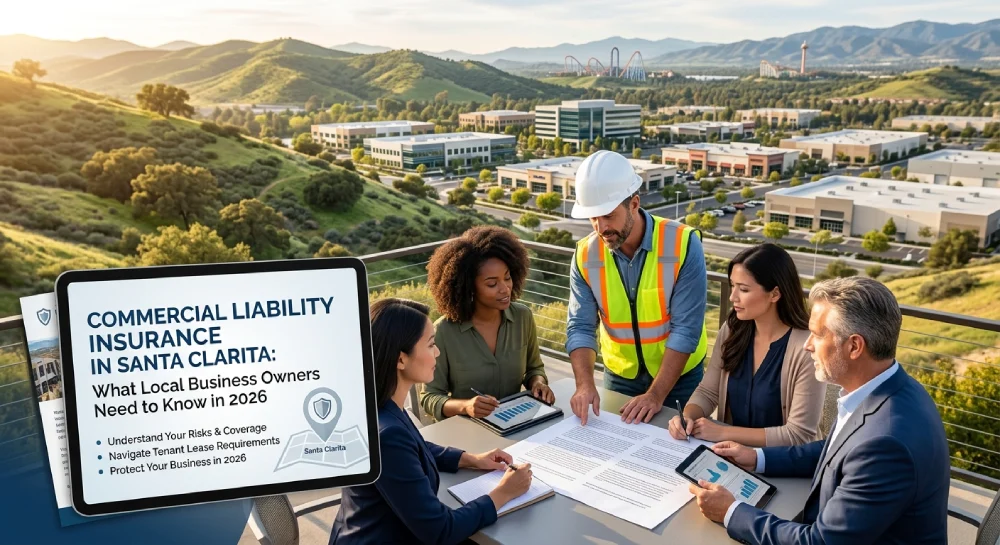
Commercial liability insurance is difficult to ignore until a customer gets injured, property damage occurs, or a company is faced with the possibility of a lawsuit. In the case of Santa Clarita owners, commercial liability insurance is a way to address third-party covered claims while also fulfilling the lease or contract terms.
This guide provides information on the coverage for liability, types of commercial insurance, tenant guidelines, and other policy information that can impact the amount of claims.
Why Commercial Liability Insurance Matters for Santa Clarita Businesses
Commercial liability insurance typically addresses certain covered third-party claims that relate to injuries to the body, property damage, or personal and advertising injuries that result from business operations. Retailers, contractors, offices, or restaurants may have different risks; thus, coverage must reflect current business operations.
A policy can be placed alongside other insurance policies or property. The complete risk scenario is essential when comparing insurance companies for commercial purposes since a lower cost could be accompanied by different limits, exclusions, or a deductible.
What Coverage Should a Local Business Owner Review?
Common forms of commercial insurance are:
- General liability for third-party injuries and property damage claims.
- Commercial property insurance for damaged buildings, equipment, inventory, items, or contents.
- Business interruption insurance coverage for incidents that cause disruption to operations.
- Commercial cars for the risk of business vehicles.
- Workers’ compensation when it is required.
- Professional liability in relation to certain professional service exposures.

Understand valuation and coinsurance
Insurance policies for property may include actual replacement cost as well as coinsurance clauses. Learn how the valuation process is decided and whether depreciation or other adjustments are applicable.
A coinsurance penalty could lower the amount of a covered claim if the required levels of insurance are not satisfied. Request an example using the property’s value prior to deciding on the limits.
How to Compare Commercial Insurance Near Me
Finding commercial insurance close to me is an excellent beginning point, but it doesn’t mean that the policy is suitable. Compare rates using similar business details and then look over coverage, not only price.
A practical four-step review
- List Exposures: premises, employees, vehicles, equipment, inventory, customers, subcontractors, and even services.
- Checking for requirements. Review leases, agreements, as well as tenant insurance conditions.
- Compare the details: examine limits, exclusions, deductibles, and endorsements.
- Review areas of need: ask whether separate endorsements or coverage is the best option.
California Policy Details Business Owners Should Understand
When you review commercial insurance in California, make sure you take the time to read your declarations, endorsements, conditions, and exclusions together. Commercial liability insurance doesn’t automatically cover auto, property, workers’ compensation, or professional risks.
Ask about ordinance and law coverage of certain costs that are linked to the current building regulations following the loss. If protection is available, it depends on the policy’s language, limits, and restrictions.
Check contracts before buying
Tenant insurance requirements can include the limits of liability, as well as certificates or additional insured status or coverage for property. Compare them to the actual policy. A certificate is not a way to exclude coverage.

When a Commercial Insurance Broker Can Help
An insurance agent for commercial clients is able to collect information, request quotes, and discuss the distinctions. This can be helpful in the event of a company having multiple policies, operations that are unusual, and multiple locations. Specific obligations in contracts.
Know what liability insurance for commercial businesses includes and does not cover, and understand how commercial liability insurance applies to your specific risks.
Conclusion
The choice of commercial insurance liability in Santa Clarita should reflect your risks, not only the cheapest quote. Find commercial insurance companies with uniform information, and then look over limitations, exclusions, deductibles, endorsements, and contractual obligations.
Commercial liability insurance is an element of a larger protection plan, especially when it is combined with coverage for property or other. If you aren’t sure what to choose, talk to an experienced insurance professional. Begin by reviewing your policy and the requirements of your lease or contract prior to renewal.
Frequently Asked Questions
What does business liability coverage generally cover?
Commercial liability insurance generally addresses third-party claims that are covered, for example, bodily injury and property damage, but subject to the terms of the policy and exclusions.
Is commercial liability insurance required for every California business?
It’s not always the case. The requirements can be based on laws or leases, contracts, as well as lenders, employees,s and the kind of business.
How much liability coverage does a business need?
There isn’t a universal limit. Take into consideration assets, operations, contracts, and limits with an expert in the field of insurance.
Is commercial general insurance the same as general liability?
The definitions can differ; however, commercial general liability typically refers to protection of business liability and does not encompass any other type of insurance.
What is a coinsurance penalty?
This is a possible reduction in a property claim if the insured value does not match the required coinsurance percentage.
Why consider ordinance and law coverage?
It could cover certain additional costs incurred by implementing requirements for building after an insured loss, subject to the policy’s terms.
Does a landlord’s insurance protect a tenant?
Not necessarily. Tenants typically need to examine their own property and leases, liabilities, and contractual requirements.
Can I compare commercial insurance companies online?
Yes, but make sure to compare limits as well as exclusions and deductibles. endorsements, and requirements — not only quoted prices.
What information is needed for a quote?
Insurers can request information about the business, including property valuations, vehicles employees, the history of claims, and lease conditions.
When should a business review its liability coverage?
Check it out at renewal time and when major changes occur, like new facilities, vehicles, employees, equipment or other services.