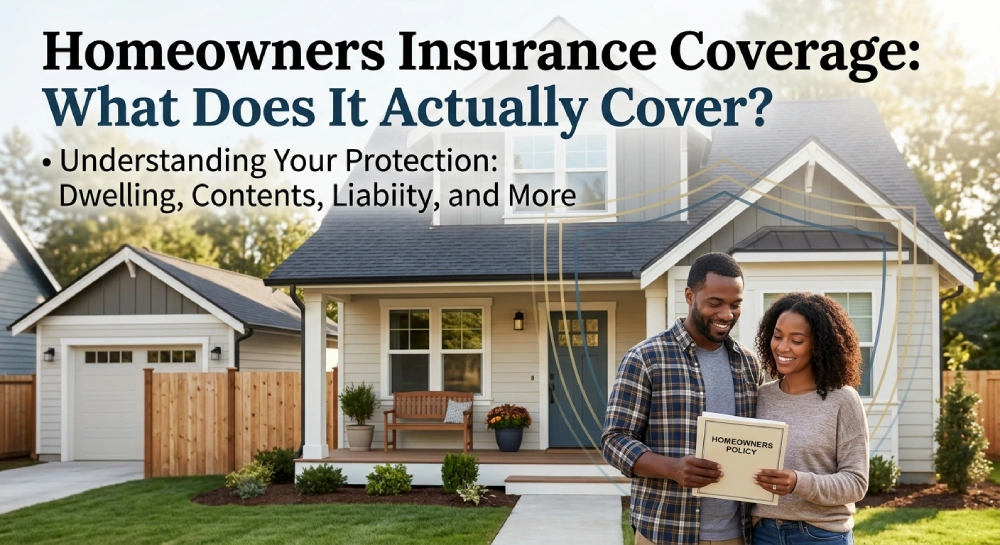
The purchase of a home is a huge investment and the proper insurance policy is essential to safeguarding that investment against loss of unforeseen events. However, a policy does not cover all types of damage.
Knowing homeowners insurance coverage and what their limits are can help you understand what protection you’re paying for, what you might need to supplement with extra coverage, and what you might not need if you aren’t paying for the coverage.
What Does Homeowners Insurance Coverage Include?
Most homeowners insurance coverage is designed to protect a number of areas, not one benefit. Each component can provide some insight to where you may have gaps in your policy. A typical policy will cover a number of important areas of your home and finances if something is damaged or lost because of the covered event.
Dwelling Coverage
Dwelling coverage also insures the high-value structure of your home, which includes the walls, roof, floors and permanently installed fixtures. This coverage provides a benefit to help cover repair or replacement costs to the property, if damaged by a covered event, up to the policy limit.
Other Structures
Separate structures, such as garages, can also be protected. It can be a detached garage, shed, fence or other structure dependent on the policy and cause of damage.
Personal Property
Your belongings may also be covered. Furniture, clothing, electronics, appliances and personal belongings could be protected for damage or loss if they are caused by a covered event.
Personal Liability Insurance
Personal liability insurance can cover you if someone gets injured on your property or you are legally liable for damaging another person’s property. It can also cover some legal costs, depending on the conditions of the policy.
Additional Living Expenses
If your home is temporarily not livable due to covered damage, there may be some additional living expenses you need to cover while you’re living elsewhere, and additional living expenses may be available. This may comprise temporary housing, higher cost of meals, as appropriate within policy limits.
This type of coverage is often referred to as loss of use coverage.
Medical Payments
Some policies also cover some of the medical costs if someone else gets injured on your premises, even if you are not at fault. The quantity available is typically subject to limitation and subject to the policy.
What Types of Home Insurance Are Available?
While a standard homeowners policy might be sufficient for an owner-occupied property, landlords or renters and those who own some specialty properties may require a different type of policy.
When comparing policies, think about what the property is being used for, where it is located, replacement value and risks that apply to the property.
What Does Basic Home Insurance Not Cover?
Basic home insurance covers all types of damage.
Typical home insurance exclusions policies may involve:
- Flood damage
- Earthquake damage
- Normal wear and tear
- Poor maintenance
- Pest-related damage
- Certain water-related losses
Certain exclusions may be subject to a policy or endorsement. Coverage may also differ from one insurance company to another, so it is important to always ask the policy documentation to check.
What Are Home Insurance Endorsements?
Home insurance endorsements are things that are added to or changes in a standard home insurance policy. These can be helpful if basic coverage isn’t extensive enough for a specific item or risk.
For instance, if you have a large collection of jewelry, collectibles, equipment or other high dollar items in your home, there may be more protection required than the standard limits provided.
Endorsements may also be used to cover unique risks which are not covered under a standard policy.
How Much Does Homeowners Insurance Cost?
The location, age, construction, replacement value, deductible, coverage amount, claims history and endorsements are all factors that will affect the homeowners insurance cost.
Not all policies are cheap, and not all policies are the best. Lower premiums could involve greater deductibles, coverage caps and reduced coverage.
Don’t just consider the price when comparing quotes – take the complete coverage into consideration.

What Should You Know Before Buying Homeowners Insurance?
Before selecting homeowners insurance coverage, review the policy carefully instead of assuming every common household problem is protected.
Pay particular attention to:
- Coverage limits
- Deductibles
- Policy exclusions
- Personal property protection
- Liability limits
- Additional living expenses
- Available endorsements
- Replacement-cost provisions
It is also important to update your policy after major renovations, expensive purchases, or significant changes to the property.
Conclusion
Having an understanding of these homeowners insurance coverages will assist you in making an educated choice to guard your home.
Make sure you are aware of what your policy does and doesn’t cover and think about extra cover if you need it because of the risks on your property or its value.
Frequently Asked Questions
What does homeowners insurance cover?
Typically covers the loss of the home, other buildings, personal property, liability and some other living costs if the loss is caused by an insured event and is covered by the policy’s terms.
Does homeowners insurance cover flooding?
Typical homeowner coverage won’t pay for flood damage. Flood insurance may be required for homeowners who are susceptible to flood risks in order to cover the property from losses covered by flood insurance.
Does homeowners insurance cover personal belongings?
Absolutely, personal property coverage can help cover certain covered losses to eligible personal property. How much is paid may be impacted by limits, deductibles, exclusions and the form of reimbursement.
What is personal liability insurance?
Personal liability insurance is designed to help you financially recover if you are legally liable to another party for injury or some property damage, as long as the policy limits and coverage are reached.
What are additional living expenses?
Additional living expenses help cover certain increased costs when covered property damage makes your home temporarily unlivable. This can include qualifying accommodation and meal expenses.
What is loss of use coverage?
Loss of use coverage can help pay certain additional expenses when you cannot live in your home because of covered damage. The policy determines which expenses qualify and how much is available.
What are home insurance endorsements?
Endorsements are policy additions that can expand, modify, or provide specific coverage. They can be useful for valuable belongings or risks that receive limited protection under a standard policy.
What are common home insurance exclusions?
Common exclusions may include flooding, earthquakes, normal deterioration, maintenance problems, and certain pest-related damage. Exact exclusions vary by insurer and policy.
How much does homeowners insurance cost?
The homeowners insurance cost depends on factors such as location, home value, construction, deductible, coverage limits, claims history, and additional coverage selected.
What is the purpose of home insurance?
The purpose of home insurance is to provide financial protection against certain covered property losses and liability risks, helping homeowners manage unexpected expenses.