Roofing contractor insurance in 2026 is something every roofer ends up dealing with the moment real jobs start coming in. It is not just paperwork or a formality for clients. It is the thing that quietly decides whether a roofing business can survive a bad day on site or collapse under one accident.
It is what stands between a normal working day and a financial disaster. One slip on a wet roof, one broken tile that damages a client’s property, or one worker injury can turn into thousands of dollars in loss. That is exactly where roofing contractor steps in and takes the pressure off the business owner.
The cost in 2026 is not random. It is based on how risky the work is, how the team behaves on job sites, and how much trust an insurance company has in that business staying safe and controlled.
Why pricing is different for every roofing business
Roofing company insurance is never the same price for everyone because no two roofing businesses run the same way in real life. Some crews work small residential jobs with careful planning, while others jump between large commercial roofs where risk is much higher.
Insurance companies quietly study how a roofing business operates before deciding what to charge.
What they really look at in simple terms
- How many workers are climbing roofs every day
- Whether the work is residential, commercial, or industrial
- How often accidents or small claims have happened before
- How strong the safety habits are on job sites
- How large the projects usually are
- How much coverage the business is asking for
So the truth is simple. Roofing general liability insurance goes up when risk goes up, and it comes down when a business proves it can stay safe and controlled.
What roofing contractor insurance actually costs in 2026
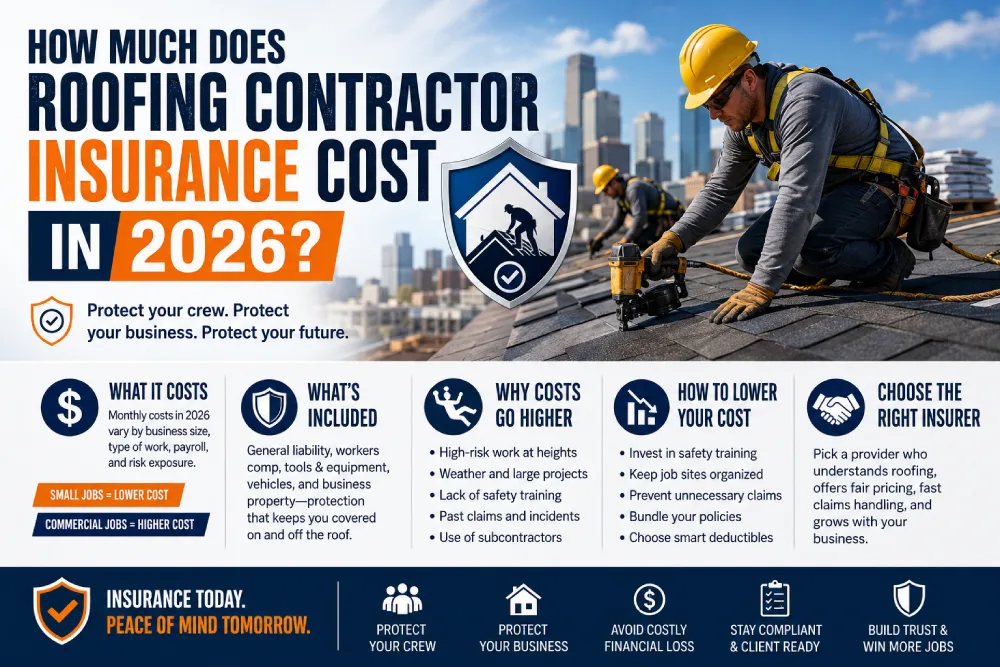
Contractor insurance cost in 2026 depends a lot on where the business sits in the industry. A small roofer just starting out will not see the same pricing as a company handling large commercial buildings every week.
In real-world terms, it usually looks like this
- Small roofing businesses usually pay lower monthly amounts because work volume is limited and risk exposure is lower
- Growing roofing companies start paying more as more workers, tools, and projects are added
- Commercial roofing contractor insurance often pay the highest because one mistake on a big site can turn into a very expensive claim
So the pattern never really changes. More work and more risk always lead to higher roofing contractor insurance costs.
What is actually included inside roofing insurance
Roof insurance coverage is not just one thing. It is more like a bundle of protections working together so a roofing business does not fall apart when something goes wrong.
Breaking it down in simple language
- General liability coverage that steps in when someone else’s property gets damaged or someone outside the crew gets hurt
- Workers compensation that covers employees when accidents happen on the roof or job site
- Vehicle coverage for trucks and vans that carry materials and workers
- Tool and equipment protection because roofing gear is expensive and easy to damage or lose
- Business property coverage for office space, storage, and assets
Each part of roofing contractor is basically there to stop one problem from turning into a full business crisis.
Why roofing work always pushes insurance cost higher
Roof replacement insurance is strongly affected by how dangerous roofing work actually is. And in reality, roofing is one of the most accident-prone jobs in construction because it involves height, weather, and heavy materials all at the same time.
Situations that make insurers nervous
- Workers standing on steep or slippery roofs
- Large commercial roofs where one mistake affects a huge surface area
- Working in heat, rain, or strong wind conditions
- No proper safety training or shortcuts on-site
- Too much dependence on subcontractors who may not follow safety rules
The more of these situations exist, the more roofing contractor cost increases because insurers expect more claims to happen.
How contractors can actually bring the cost down
roofing contractor insurance does not always have to keep going up forever. Contractors who take safety seriously usually notice that their insurance becomes more manageable over time.
Real ways roofing businesses reduce cost pressure
- Making safety training part of everyday work, not just occasional meetings
- Keeping job sites organized so accidents are less likely
- Avoiding unnecessary claims by handling small issues internally when safe
- Choosing insurance packages instead of random separate policies
- Increasing deductibles only when the business can actually handle it financially
Insurance companies reward consistency. A safer roofing business is always seen as less risky to insure, which slowly brings roofing contractor insurance cost down.
How to pick the right insurance company
General liability insurance for roofing contractors only works well when the insurance provider actually understands roofing work. If they treat it like general business insurance, problems usually show up later during claims.
What matters in real decision making
- Whether they have real experience with roofing contractors
- How quickly they respond when something goes wrong
- Whether claims are handled fairly without unnecessary delays
- If coverage can adjust as the business grows
- Whether explanations are simple or overly complicated
A good insurance provider makes roofing contractor feel like support, not stress.
Mistakes that quietly make insurance more expensive
roofing contractor insurance often becomes expensive not because of big events, but because of small repeated mistakes that build up over time.
Common real-world mistakes
- Going for the cheapest policy without checking what is actually covered
- Ignoring safety rules just to finish jobs faster
- Not updating coverage when the business expands
- Not reading exclusions and assuming everything is covered
- Allowing small claims to pile up over time
These mistakes slowly push roofing contractor cost higher without the business even noticing at first.
Conclusion:
roofing contractor insurance in 2026 is not just about how much money goes out every month. It is about how secure a roofing business feels when things do not go as planned.
The cost is shaped by risk, but risk is shaped by behavior, safety, and discipline on the job. A roofing business that stays organized, trains its workers, and avoids unnecessary accidents will always have better control over roofing contractor cost in the long run.
In the end, roofing contractor is not just protection. It is what keeps the business running even when something goes wrong on the roof.
Frequently Asked Questions
Why does roofing contractor insurance feel expensive in 2026?
It feels expensive because roofing work involves real physical risk every day. Working at heights, handling heavy materials, and dealing with weather conditions makes accidents more likely, which increases insurance pricing.
What actually decides how much insurance a roofer pays?
The cost mainly depends on risk level, number of workers, type of roofing projects, past claims, and how strong safety practices are on job sites. More risk always leads to higher roofing contractor cost.
Can a new roofing business get lower insurance prices?
Yes, new businesses can sometimes get lower pricing, especially if they have small teams and simple residential work. But safety practices still play a big role in keeping roofing contractor insurance affordable.
Why do claims make insurance more expensive later?
Claims tell insurers that accidents are happening. If a business has more claims, insurance companies assume higher future risk, which increases roofing contractor cost over time.
Is commercial roofing always more expensive to insure?
Yes, commercial roofing usually costs more to insure because projects are larger, more complex, and involve higher financial risk if something goes wrong.
How does safety training affect insurance pricing?
Good safety training reduces accidents. Fewer accidents mean fewer claims, and fewer claims usually lead to lower roofing contractor insurance cost over time.
What happens if a roofing company has no insurance?
Without insurance, even a single accident or legal claim can create massive financial pressure. In many cases, it can seriously damage or shut down the business.
Do subcontractors increase insurance cost?
Yes, subcontractors can increase risk because their safety practices may not always match the main company’s standards, which can affect roofing contractor insurance pricing.
How often should roofing insurance be reviewed?
Roofing insurance should be reviewed at least once a year or whenever the business grows, hires more staff, or starts handling larger projects.
Why do clients care so much about roofing insurance?
Clients want protection in case something goes wrong. Roofing contractor insurance gives them confidence that damages, injuries, or accidents will not become their financial problem.