Running insurance for a painting business is risky. Ladders, chemicals, other people’s property. One mistake can cost you everything. That is why the right painting contractors insurance is not optional. It is what stands between a bad jobsite accident and the end of your business.
What Insurance Does a Painting Business Need?
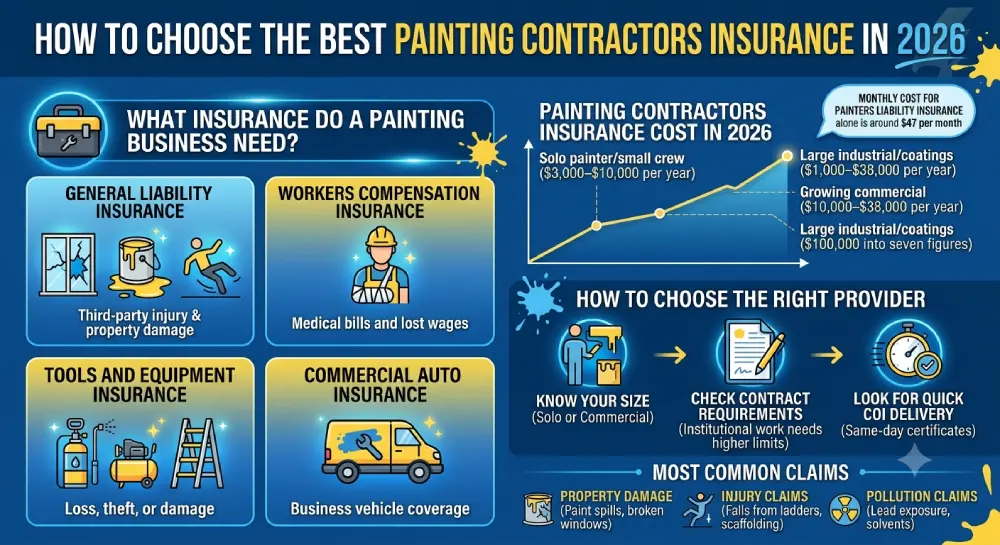
Affordable liability coverage for interior and exterior painters insurance is not one policy. It is a package. General liability insurance covers third-party bodily injury and property damage. A client slips on a drop sheet. You spill paint on expensive carpet. Your ladder breaks a window. General liability pays for it.
- Workers compensation insurance for painters: If you have employees, this is required in most states . It covers medical bills and lost wages if a worker gets hurt on the job.
- Tools and equipment insurance. Painting requires expensive gear. Sprayers, compressors, scaffolding, ladders. This covers them if they are lost, stolen, or damaged.
- Commercial auto insurance. Your work van or truck needs business coverage. Personal auto policies do not cover commercial use.
- Umbrella liability. Extra protection above your primary limits . Institutional contracts often require it.
- Professional liability (E&O). Covers mistakes like wrong color or missed deadlines that cause financial loss.
- Pollution liability. Standard GL excludes pollution. Spray, solvents, and lead exposures need separate coverage.

Painting Contractors Insurance Cost in 2026
Monthly insurance cost depends on your size. Here is what painting contractors insurance costs by revenue tier:
- Solo painter / small crew ($250K–$1M): $3,000–$10,000 per year
- Growing commercial ($1M–$5M): $10,000–$38,000 per year
- Mid-market commercial/industrial ($5M–$15M): $38,000–$100,000+ per year
- Large industrial/coatings ($15M+): $100,000 into seven figures
On the other hand, monthly cost for painters liability insurance alone is much lower. Most painters pay a median of about $47 per month for GL. That is around $564 per year. Workers’ comp runs a median of $184 per month.
What Drives the Cost?
Painting contractors insurance is the biggest line for crewed operations. It is priced per $100 of payroll. The national average for painters is around $5.57 per $100. But it varies wildly by state. North Dakota runs $2.54. New York runs $13.20.
Your experience modification rate (EMR) multiplies every dollar. An EMR below 1.0 earns credits. Above 1.0 surcharges everything . Institutional clients often set a maximum EMR, often 1.0 to qualify to bid.
Subcontractor management matters too. Uninsured subs roll into your audit as your own payroll . Keeping certificates current is one of the largest cost levers.
How to Choose the Right Provider
- Know your size. Solo painters are well served by State Farm, GEICO, or Progressive. Growing commercial operations need a broker who understands construction.
- Check contract requirements. Institutional work often requires higher limits and specific endorsements. Make sure your coverage matches what your clients demand.
- Ask about pollution coverage. Standard GL excludes it. If you spray or work with solvents, you need separate pollution liability.
- Look for quick COI delivery. Clients ask for certificates frequently. A provider that delivers same-day COIs keeps your jobs moving.
The Most Common Claims and How to Prevent Them
Knowing what claims hit painting contractors most often helps you stop them before they happen and keeps your insurance costs down.
Property damage claims? They’re the most common. Paint spills on carpets, furniture, or expensive flooring. Ladders or scaffolding banging up siding, windows, or landscaping. All avoidable with good drop cloths, proper masking, and careful equipment placement.
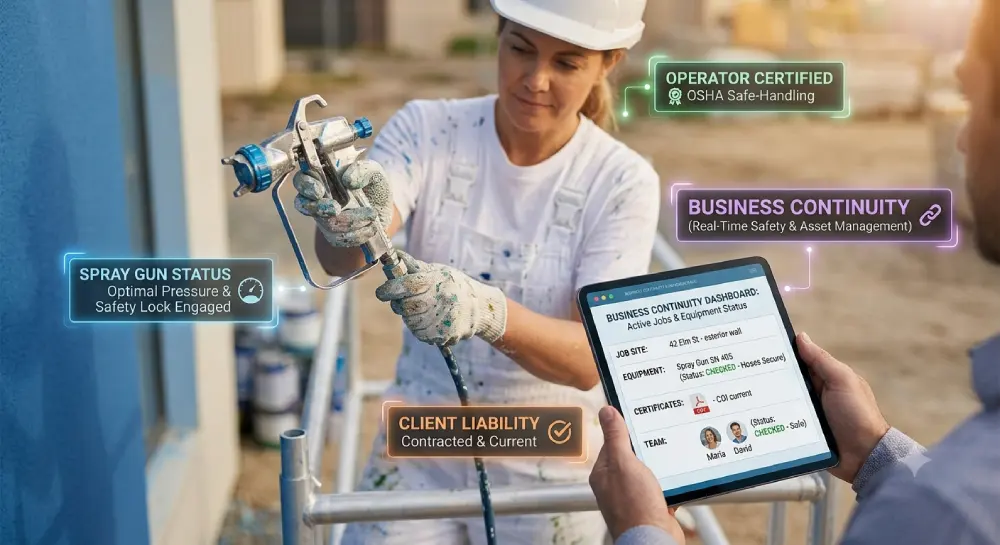
Injury claims are next. Falls from ladders and scaffolding make up a big chunk of workers’ comp claims. Proper training, regular equipment checks, and harnesses for elevated work cut those risks way down. And a clean jobsite,cords and hoses secured and prevents trip-and-fall incidents.
Safer operation means a lower EMR. And that means more affordable painting contractors insurance.
Conclusion
Painting contractors insurance is the difference between a bad day and a bankrupt business. General liability is the foundation. Workers’ comp is required if you have employees. Tools and equipment coverage protects your gear.
On the other hand, Cost depends on size, revenue, and claims history. Small operations pay a few thousand per year. Large commercial firms pay well into six figures. But every dollar is worth it when a claim hits.
Frequently Asked Questions
What is the average monthly cost of painters insurance?
General liability costs around $47 per month. Workers’ comp costs about $184 per month. A full program for a solo painter runs $3,000 to $10,000 per year.
Do I need workers’ comp insurance as a painting contractor?
Yes. In 48 states, workers’ comp is required once you hire an employee. Starting in 2026, California requires all contractors to carry it.
What is the best insurance for a painting business?
General liability, workers’ comp, tools and equipment, commercial auto, and umbrella liability form the core package. Larger commercial painting business insurance need pollution liability and professional liability.
Is painting contractor insurance required by law?
General liability is not required by state law, but most contracts require proof of coverage. Workers’ comp is required by law in most states once you hire employees.
Can I get insurance for my painting tools and sprayers?
painting contractors insurance can be covered under inland marine policies for theft, damage, or loss in transit.
Does general liability cover paint spills and property damage?
Yes. General liability covers third-party property damage, including paint spills on carpets or furniture.
How does workers’ comp work for painting contractors?
It covers medical bills and lost wages for employees injured on the job. Premium is based on payroll and claims history.
What does commercial auto insurance cover for painters?
It covers accidents involving work vehicles like vans or trucks. Personal auto policies do not cover business use.
Is pollution liability necessary for painters?
If you spray paint, use solvents, or work with lead, yes. Standard GL policies exclude pollution. Separate pollution coverage is essential for these exposures.
How can I reduce my painting insurance costs?
Manage your EMR through safety programs. Keep subcontractor certificates current. Bundle policies for discounts. Document fall-protection and OSHA compliance.