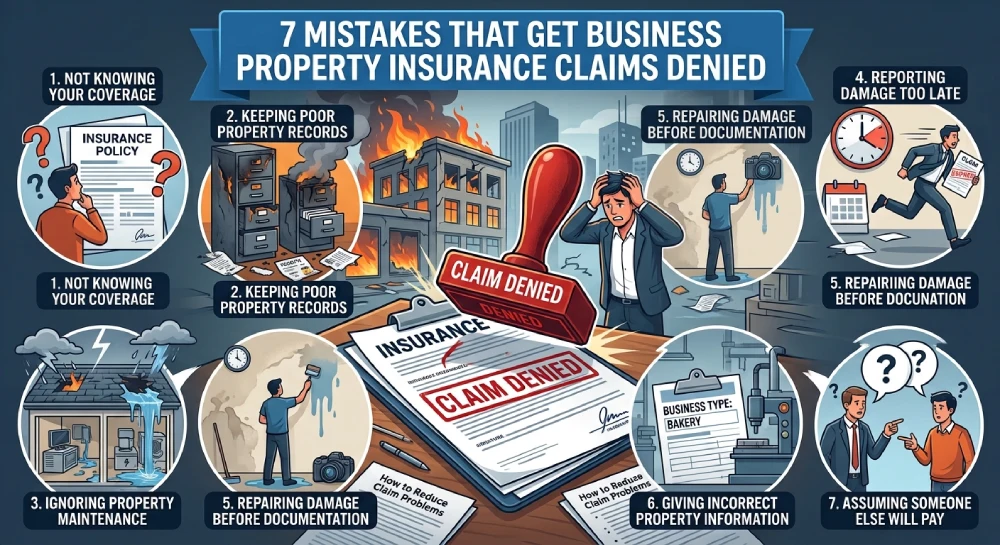
Business property insurance helps protect a company’s building, equipment, inventory, furniture, and other physical assets. However, having a policy does not guarantee that every claim will be approved. Understanding these seven common mistakes can help businesses avoid claim problems and better understand their business property coverage requirements.
Whether a property loss is covered depends on the policy’s covered causes of loss, exclusions, limits, deductibles, valuation provisions, and the circumstances surrounding the damage. Businesses should also understand their responsibilities after a loss, including notifying the insurer, protecting the property from further damage, and preserving evidence.
1. Not Knowing Your Coverage
Many owners assume property insurance for business covers every type of damage. However, a policy has covered losses, exclusions, deductibles, limits, and other considerations applicable to a business. Businesses should review whether their policy adequately covers the building, business personal property, equipment, inventory, furniture, and other eligible assets.
They should also understand coverage limits, deductibles, exclusions, covered causes of loss, and whether damaged property is valued on a replacement cost or actual cash value basis. Coverage should be reviewed whenever the business acquires significant equipment, expands inventory, renovates the premises, or changes operation
2. Keeping Poor Property Records
Failure to maintain inventories, receipts, and other paperwork can impact an organization in many ways, including denied business property insurance claims. For example, an approved commercial property insurance policy might cover a building and its contents.
If there is a fire and the company does not have documentation on its computers, tools, and inventory, the files can potentially be unrecoverable. Keeping proper records aids in the preservation of inventories of equipment, furniture, and other items.
3. Ignoring Property Maintenance
Neglecting roof, plumbing, and other repairs creates additional risks, especially if an insurer determines that maintenance contributed to the loss.
Regular inspections and maintenance records can support building insurance for commercial property claims. They also help show how the property was maintained before the loss occurred.
4. Reporting Damage Too Late
A firm’s failure to report a loss in time can cause complications, including denied claims and coverage limitations. Once the loss occurs, the organization must report the problem to its insurer immediately and must take photos, if possible. Before making repairs, it is critical to capture photos and videos, receipts, invoices, estimates, and other supporting documents.
What to Document
- Photos and video evidence
- Date and time of loss
- Damaged items
- Estimated commercial property insurance cost
- Receipts, estimates, and invoices
- Police or other reports, when applicable
5. Repairing Damage Before Documentation
When a fire, lightning, water, wind, vandalism, or other damage occurs, it may create hazardous conditions that require emergency repairs. A business should ensure it documents the damage prior to making any repairs.
For instance, if water has damaged a building’s flooring, walls, equipment, inventory, and furniture, the firm must capture photos and videos of the damage.
6. Giving Incorrect Property Information
Accurate information is important when purchasing commercial premises insurance. Significant renovations or changes to occupants, inventory, or other factors may impact the policy. For example, an organization may occupy a building initially designed for a different industry. When significant changes occur, it is essential to report the modifications rather than relying on previous coverage.

7. Assuming Someone Else Will Pay
A landlord and tenant may have different insurance responsibilities. The landlord’s policy generally covers the building, while a tenant may need coverage for business equipment, inventory, furniture, and certain improvements. Business property insurance is different from commercial property liability coverage, which addresses a separate set of risks.
How to Reduce Claim Problems
A few simple habits can make claims easier to manage:
- Review your policy and exclusions regularly.
- Keep an updated property inventory.
- Photograph valuable business assets.
- Maintain the building and save service records.
- Report losses promptly.
- Document damage before permanent repairs.
- Update your insurer after major property changes.
Conclusion
Business property insurance can help protect a company from covered property losses, but coverage depends on the policy’s terms, limits, and exclusions. Businesses can reduce claim problems by understanding their coverage, maintaining accurate records, keeping the property in good condition, and reporting damage promptly. Taking these steps can make it easier to document a loss and support a claim when covered damage occurs.
Frequently Asked Questions
What is business property insurance?
Business property insurance provides coverage for qualifying losses to eligible company buildings, contents, and equipment.
Why can a property insurance claim be denied?
Many claims get rejected due to policy limitations, exclusions, provisions, inaccuracies in information, and delays in notification.
Does commercial property insurance cover water damage?
Based on the coverage and the cause of loss, water damage may be eligible for compensation.
Can poor maintenance affect a claim?
Yes, a firm’s poor maintenance can reduce the likelihood of approved claims, as an insurer may limit the compensation due to the poor condition of the building or equipment.
How quickly should property damage be reported?
Insurance for business property must report the incident as soon as possible after it occurs.
What records should a business keep?
Businesses should keep receipts, property inventories, invoices, maintenance records, and other documents that can help establish ownership and value.
Who insures a commercial property?
A building owner typically insures the structure, whereas a tenant must cover equipment, contents, furnishings, and any improvements.
Does property insurance cover business equipment?
Yes. Business equipment may be covered when it falls within the policy’s covered property, and the loss is covered.
What should you do after property damage?
The first priority is the protection of persons and the prevention of further loss, if possible, and the documentation of evidence.
How can businesses reduce claim problems?
Businesses can reduce claim problems by reviewing their coverage, maintaining the property, keeping accurate records, and reporting losses promptly.