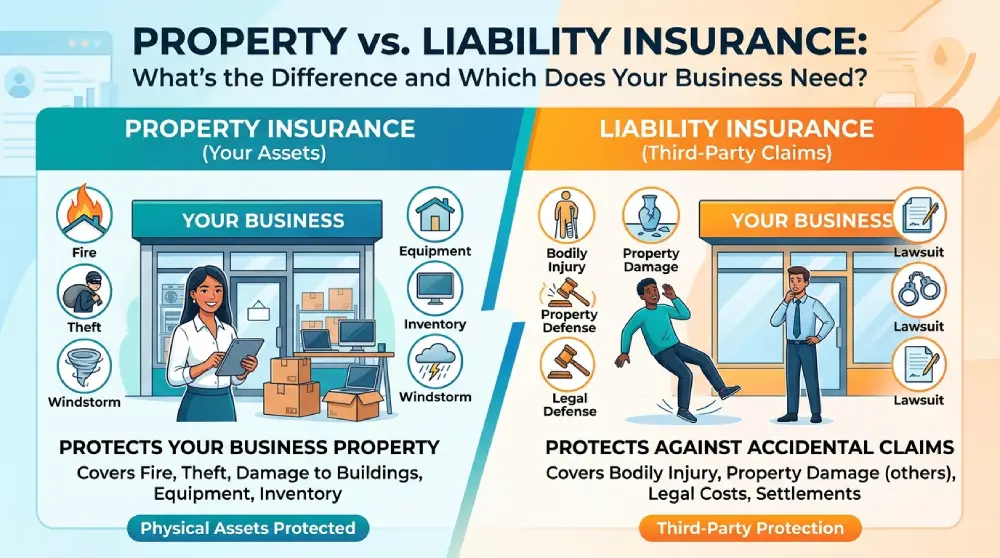
Running a business means protecting your property, employees, customers, and finances. Two common types of coverage are property and liability insurance. Although both protect your business, they cover different risks.
Understanding property vs liability insurance can help you choose the right coverage and avoid unexpected expenses.
What Is Property Insurance?
Property insurance protects the physical assets your business owns or uses, including buildings, furniture, equipment, computers, and inventory.
It may cover losses caused by:
- Fire and smoke damage
- Theft and vandalism
- Certain types of water damage
- Windstorms and other covered events
Coverage depends on the policy. Floods and earthquakes, for example, often require separate protection.

What Is Liability Insurance?
Liability insurance helps protect your business when someone claims your operations caused them injury, property damage, or other covered harm.
A general liability policy commonly covers:
- Bodily injury: A customer slips and gets injured at your business.
- Property damage: Your employee accidentally damages a client’s property.
- Personal and advertising injury: Certain claims involving libel, slander, or advertising content.
- Legal expenses: Defense costs and covered settlements.
Property vs. Liability Insurance: Key Differences
The biggest difference is what each policy protects. Property insurance covers your business assets, while liability insurance covers certain claims made against your business.
| Property Insurance | Liability Insurance |
| Protects business-owned property | Protects against covered third-party claims |
| Covers certain physical losses | Covers certain injuries and property damage caused to others |
| Helps repair or replace assets | Helps pay legal costs and covered settlements |
| Covers equipment, inventory, and buildings | Covers customer and third-party claims |
For example, if a fire damages your office, property insurance may cover repairs. If a customer gets injured inside your office, general liability insurance may help cover the claim.
- What Does General Liability Insurance Cover?
General liability insurance protects businesses against several common third-party claims. However, it does not cover every type of loss.
- Does General Liability Cover Theft?
Generally, no. If someone steals your business equipment, inventory, or computers, you typically need commercial property insurance with theft coverage.
- Does General Liability Insurance Cover Negligence?
It may cover certain negligence claims involving bodily injury or property damage. However, professional mistakes and intentional acts are generally excluded. Businesses providing professional services may need errors and omissions insurance.
- Does General Liability Cover Property Damage?
Yes, but usually only damage your business accidentally causes to someone else’s property. Damage to your own building or equipment generally requires property insurance.
What Is Fire Damage Legal Liability?
Fire damage legal liability may cover your legal responsibility if your business accidentally causes fire damage to a rented building or space.
For example, if an accidental fire damages your rented office, this coverage may help pay for covered damage. It does not replace commercial property insurance.
General Liability Insurance for LLCs
Forming an LLC does not protect your business from every lawsuit. General liability insurance for LLC owners adds protection against covered customer injuries, property damage, and advertising-related claims.
It can be useful for:
- Retail stores and restaurants
- Contractors and construction businesses
- Cleaning companies
- Small offices
- Businesses working at customer locations
What Is Comprehensive General Liability Insurance?
Comprehensive general liability insurance generally refers to broad protection against third-party claims, including bodily injury, property damage, and personal or advertising injury.
However, comprehensive does not mean everything is covered. Policy limits, exclusions, and conditions still apply.
Does Your Business Need Both Types of Insurance?
Many businesses benefit from having both property and liability insurance.
Property insurance is useful if you own valuable equipment, inventory, or a business location. Liability insurance is important if customers visit your premises or your employees work at client locations.
Some insurers offer a Business Owner’s Policy (BOP), which combines general liability and commercial property coverage for eligible small businesses.

How to Find General Liability Insurance Near Me
When searching for general liability insurance near me, compare providers based on:
- Coverage limits and exclusions
- Deductibles and policy conditions
- Legal defense coverage
- Industry-specific protection
- Customer service and claims support
An insurance agent can help identify your business risks and recommend suitable coverage.
Conclusion:
Choosing between property and liability insurance depends on what you need to protect. Property insurance covers your physical assets, while liability insurance helps with certain claims made against your business.
For many businesses, having both provides stronger protection against unexpected losses.
Frequently Asked Questions
Is property insurance the same as liability insurance?
No. Property insurance protects business assets, while liability insurance covers certain third-party claims.
Does general liability insurance cover business equipment?
No. Your own equipment generally requires commercial property insurance.
Is general liability insurance required for an LLC?
Not always, but landlords, clients, contracts, or state requirements may make coverage necessary.
Does general liability cover employee injuries?
Generally, no. Workers’ compensation insurance usually covers work-related employee injuries.
Does general liability cover damage caused by employees?
It may cover accidental damage employees cause to third-party property during covered business activities.
What is the difference between general and professional liability?
General liability covers certain injury and property damage claims. Professional liability covers claims involving mistakes in professional services.
Does general liability insurance cover fire damage?
It may cover certain fire damage claims involving third-party property or rented premises, depending on the policy.
How much general liability insurance does a business need?
Coverage depends on your industry, business size, contracts, and potential risks.
Can I bundle property and liability insurance?
Yes. A Business Owner’s Policy often combines both types of coverage for eligible businesses.
Can a small business operate without general liability insurance?
Some can, but clients, landlords, or contracts may require it. Coverage can also help protect against unexpected claims.